Why Businesses Should Have an IT Asset Management Strategy
In today’s digital-first business environment, technology is no longer simply a support function it is a critical part of daily operations. From laptops and servers to cloud applications and software licenses, businesses rely on a growing number of IT assets to keep their teams productive and their operations running smoothly.
However, managing these assets without a structured approach can quickly become expensive and inefficient. Devices can be lost or underused, software licenses may go unused, and aging equipment can create security and performance risks. This is where an IT Asset Management (ITAM) strategy becomes essential.
What Is IT Asset Management?
IT Asset Management is the process of tracking, managing, maintaining, and optimizing an organization’s technology assets throughout their entire lifecycle.
An effective ITAM strategy provides businesses with a clear picture of:
- What IT assets they own or lease
- Where those assets are located
- Who is using them
- What software is installed
- Which licenses and subscriptions are active
- When equipment needs maintenance or replacement
- How much the organization is spending on technology
Rather than treating IT equipment and software as isolated purchases, ITAM creates a structured system for managing technology from acquisition to retirement.
- Keep Track of Hardware
Businesses can accumulate hundreds or even thousands of technology assets as they grow. Computers, monitors, servers, mobile devices, networking equipment, printers, and other hardware all require proper tracking.
Without an organized asset inventory, it can be difficult to determine which employee has a particular device, how old the equipment is, or whether it is still being used.
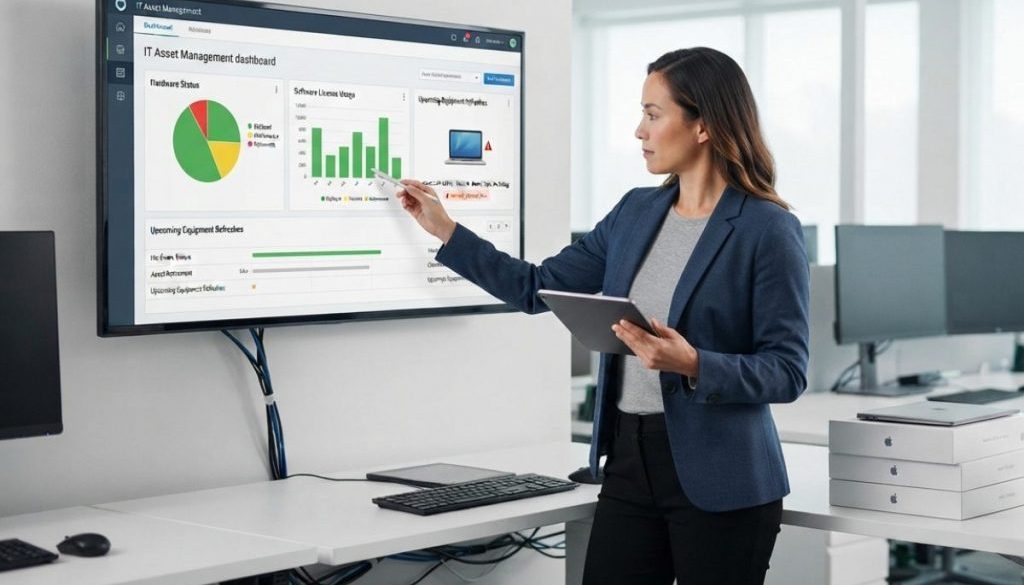
An IT asset management strategy helps maintain an accurate inventory of hardware, including information such as:
- Asset type and serial number
- Purchase date and cost
- Assigned employee or department
- Warranty information
- Location
- Maintenance history
- Expected replacement date
Having this information readily available makes IT management faster and more efficient.
- Manage Software Licenses Effectively
Software licensing is another area where businesses can easily lose money.
Organizations may subscribe to productivity tools, security software, cloud platforms, design applications, accounting systems, and many other services. Without proper tracking, companies may continue paying for licenses that are no longer needed or accidentally exceed licensing limits.
IT asset management gives businesses better visibility into their software environment. IT teams can identify unused licenses, monitor renewal dates, and ensure that employees have access to the applications they actually need.
This can reduce unnecessary subscription costs while also helping businesses avoid compliance problems associated with improperly licensed software.
- Improve Equipment Lifecycle Management
Every IT asset has a lifecycle. A typical device moves through several stages:
Planning → Procurement → Deployment → Maintenance → Upgrade → Replacement → Retirement
Managing each stage systematically helps businesses get maximum value from their technology investments.
For example, instead of waiting until an employee’s laptop suddenly fails, an IT team can identify devices approaching the end of their useful life and plan replacements in advance. This reduces unexpected downtime and makes technology spending more predictable.
For example, instead of waiting until an employee’s laptop suddenly fails, an IT team can identify devices approaching the end of their useful life and plan replacements in advance. This reduces unexpected downtime and makes technology spending more predictable.
- Make IT Budgeting More Predictable
Technology costs can become difficult to control when businesses lack visibility into their assets.
An ITAM strategy provides valuable information for budgeting and financial planning. By knowing which devices need replacement, which warranties are expiring, and which software subscriptions are due for renewal, businesses can forecast future IT expenses more accurately.
Instead of dealing with unexpected purchases, organizations can plan technology investments around their business priorities.
This also makes it easier to determine whether upgrading existing equipment, replacing it, or adopting a different solution provides the best value.
- Reduce Unnecessary IT Costs
One of the biggest benefits of IT asset management is cost optimization.
Businesses often pay for technology they no longer need. Examples include unused software subscriptions, redundant applications, inactive devices, and equipment that could be reassigned rather than replaced.
Regular asset reviews can uncover these hidden costs.
For example, if an organization discovers that 20 employees have software licenses they rarely use, those licenses may be reduced or reassigned. Similarly, an unused laptop in one department could potentially be redeployed to a new employee instead of purchasing another device.
Small savings across multiple assets can add up to significant reductions in overall IT spending.
- Strengthen Security and Compliance
IT asset management also plays an important role in cybersecurity.
Businesses cannot effectively protect technology assets if they do not know what assets they have. An accurate inventory helps IT teams identify devices that may be missing security updates, running outdated software, or operating outside company policies.
Asset tracking can also help organizations respond more effectively when an employee leaves the company. IT teams can identify the devices, accounts, and software assigned to that employee and ensure that access is removed and company equipment is recovered.
For organizations subject to regulatory or contractual requirements, accurate asset records can also make audits and compliance processes easier.
- Support Better IT Decision-Making
Good IT decisions depend on reliable information.
When business leaders have a clear understanding of their technology environment, they can make more informed decisions about upgrades, replacements, software purchases, cloud services, and infrastructure investments.
Instead of asking, “What technology do we need?” businesses can ask more useful questions:
- What do we already have?
- What is actually being used?
- What is costing us the most?
- What needs to be replaced?
- Where can we consolidate?
- Which investments will provide the greatest business value?
ITAM turns asset data into actionable business insight.
- Increase Employee Productivity
Technology problems directly affect employee productivity. An outdated computer, unreliable device, or missing software license can prevent employees from doing their jobs efficiently
With proactive IT asset management, organizations can identify potential problems before they significantly affect employees.
IT teams can also ensure that new employees receive the appropriate hardware, software, and access from day one. This creates a smoother onboarding experience and reduces the time employees spend waiting for technology resources.
How Businesses Can Build an IT Asset Management Strategy
An effective ITAM program does not necessarily need to be complicated. Businesses can start with a few fundamental steps:
Create a Complete Asset Inventory
Document all hardware, software, cloud services, and other relevant IT assets.
Assign Ownership
Record who is responsible for each asset and which employee, department, or location is using it.
Track the Entire Lifecycle
Monitor assets from purchase and deployment through maintenance, replacement, and retirement.
Review Assets Regularly
Conduct periodic reviews to identify unused equipment, outdated devices, unnecessary subscriptions, and security risks.
Establish Replacement Policies
Define when different types of equipment should normally be upgraded or replaced.
Integrate ITAM With IT Services
IT asset management works best when it is connected to help desk, cybersecurity, procurement, and other IT management processes.
The Role of Professional IT Management Services
For many businesses, maintaining an effective IT asset management program internally can be challenging. Technology environments are constantly changing, and keeping asset records accurate requires ongoing attention.
Professional IT management services can help businesses establish and maintain asset inventories, monitor hardware and software, manage device lifecycles, identify opportunities for cost savings, and support broader IT operations.
This allows business leaders to focus on their core operations while experienced IT professionals manage the technology infrastructure behind them.
Conclusion
IT assets represent a significant investment for almost every modern business. Without proper management, that investment can become a source of unnecessary costs, security risks, operational disruptions, and inefficiency.
An effective IT Asset Management strategy provides visibility and control over the technology a business depends on. By tracking hardware, managing software licenses, planning equipment lifecycles, improving budgeting, and eliminating unnecessary expenses, organizations can get greater value from their IT investments.
For businesses looking to improve efficiency and reduce technology-related costs, IT asset management should not be viewed as an optional administrative task. It should be an important part of a proactive, long-term IT management strategy.