Why Endpoint Security Matters More Than Ever
Cyber threats are no longer limited to large servers or complex IT systems. Today, laptops, desktops, smartphones, and tablets can all become entry points for cyberattacks. As businesses increasingly rely on remote working, cloud applications, and personal devices, protecting every endpoint has become an essential part of cybersecurity.
What Is Endpoint Security?
Endpoint security is the practice of protecting devices that connect to a business network from cyber threats. These endpoints can include:
- 💻 Laptops and desktop computers
- 📱 Smartphones and tablets
- 🖥️ Workstations
- 🏢 Business-connected devices
- 🌐 Remote and home-working devices
Each device connected to your network can potentially create a security weakness if it is not properly protected.
Why Are Endpoints a Major Security Risk?
Employees regularly open emails, download files, browse websites, use cloud platforms, and connect to different networks. A single malicious link or infected file can potentially introduce malware into a business environment.
Common endpoint threats include:
Phishing attacks: Employees may be tricked into clicking malicious links or providing login details.
Malware and ransomware: Infected files or applications can compromise devices and potentially spread across a network.
Unpatched software: Outdated operating systems and applications can contain security vulnerabilities that attackers may exploit.
Lost or stolen devices: A misplaced laptop or smartphone can expose sensitive business information if it is not properly secured.
Unauthorised applications: Employees installing unknown or unapproved software can introduce security risks.
How Endpoint Protection Reduces Risk
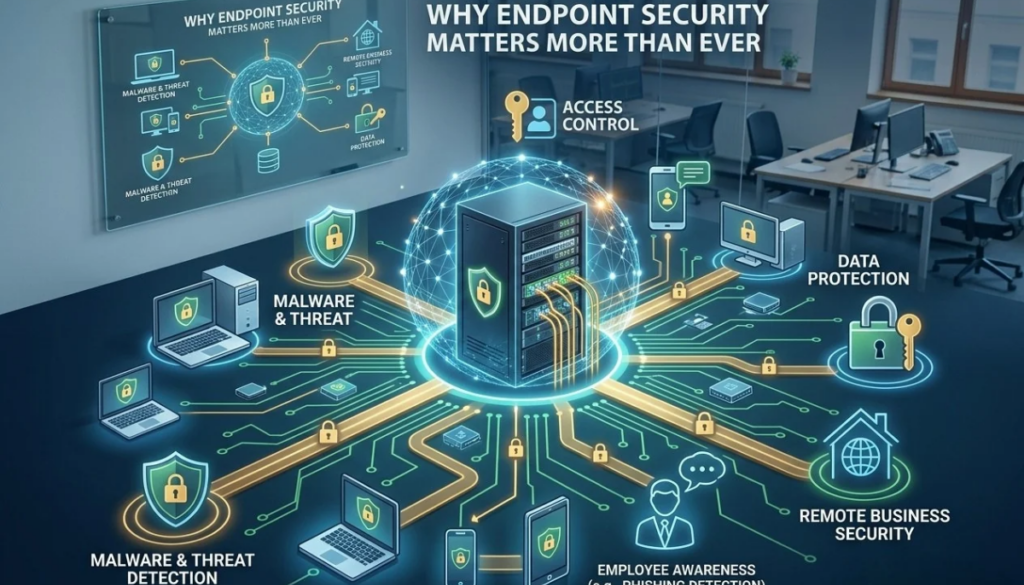
A strong endpoint security strategy provides multiple layers of protection rather than relying on a single antivirus program.
- Malware & Threat Detection
Modern endpoint protection can identify and block suspicious files, malicious software, and unusual activity before they cause significant damage.
- Regular Updates & Patch Management
Keeping operating systems and applications updated helps address known security vulnerabilities and reduces opportunities for attackers.
- Device Monitoring
Endpoint monitoring can help identify unusual behaviour, allowing potential threats to be investigated before they become major incidents.
- Access Control
Businesses can control which users and devices are allowed to access company systems and sensitive information.
- Data Protection
Encryption and other security measures can help protect business data if a device is lost, stolen, or compromised.
Endpoint Security Is Especially Important for Remote Businesses
With employees working from different locations, businesses can no longer assume that every device is operating from a secure office network.
Remote employees may connect using home Wi-Fi, public networks, or personal devices. This makes endpoint security an important part of protecting the wider business infrastructure.
Endpoint Security + Employee Awareness
Technology alone cannot eliminate every cybersecurity risk. Employees also play an important role in protecting business devices.
Regular cybersecurity awareness training can help employees recognise:
- Suspicious emails
- Fake login pages
- Unusual attachments
- Unsafe downloads
- Social engineering attempts
- Suspicious software
When secure technology and informed employees work together, businesses are better prepared to prevent and respond to cyber threats.
Protect Every Device, Protect Your Business
Your cybersecurity is only as strong as the devices connected to your business environment. A single compromised laptop or smartphone can potentially create a pathway to valuable systems and data.
That is why endpoint security should be a key part of every modern business’s cybersecurity strategy.
Need help securing your business devices?
RINCS IT Services can help businesses strengthen their IT security, protect endpoints, and reduce cybersecurity risks with proactive IT support and security solutions.
Secure your devices. Protect your data. Keep your business moving.