Cloud Migration Simplified: A Step-byStep Roadmap for SMEs
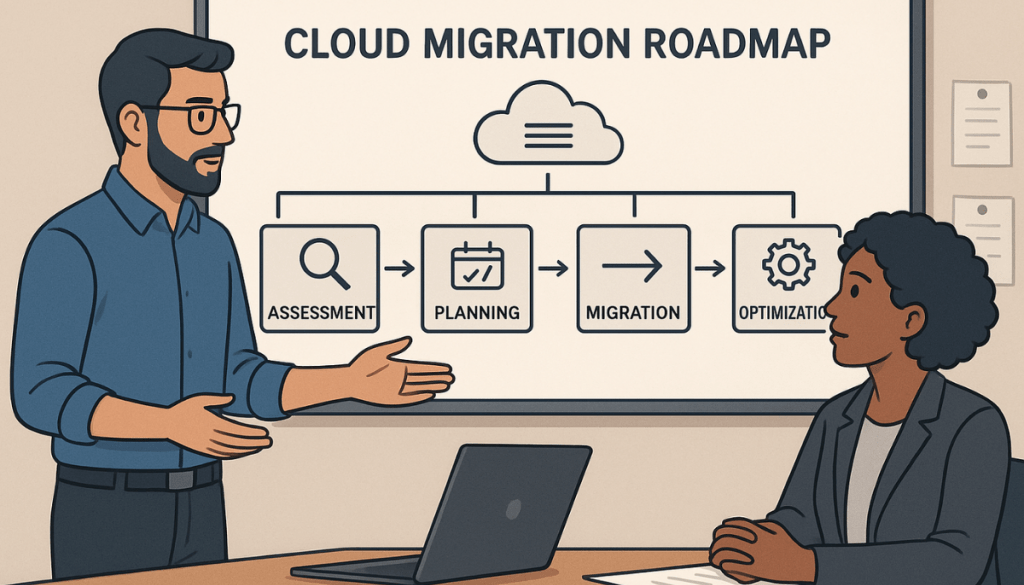
Figure 1: A cloud engineer guiding an SME through a structured cloud migration roadmap.
For many small and medium-sized businesses (SMEs), moving to the cloud can feel confusing and stressful. Business owners often worry about costs, technical challenges, or interruptions to their work. But the truth is, cloud migration doesn’t have to be complicated. With the right plan, SMEs can move to the cloud smoothly and unlock benefits such as cost savings, flexibility, scalability, and improved teamwork.
At RINCS IT, we’ve simplified the process into a practical step-by-step roadmap designed to make your cloud journey seamless.
1. Assess Your Current IT Environment
Before migrating, review what systems you already use.
- Check your current setup: List all servers, software, and storage systems.
- See how things connect: Identify system dependencies to prevent disruptions.
- Spot existing issues: Note pain points like high costs, slow performance, or frequent maintenance.
2. Define Your Business Goals
Cloud migration should align with your business objectives. Ask yourself:
- Do you want to reduce IT costs?
- Do you need better scalability to handle growth?
- Are you seeking enhanced security or compliance support?
- Do you want to enable remote work and collaboration?
3. Choose the Right Cloud Model
Cloud options are not one-size-fits-all. Choose based on your goals and budget:
- Public Cloud (AWS, Microsoft Azure, Google Cloud): Cost-effective and scalable.
- Private Cloud: Greater control and customization—ideal for sensitive data.
- Hybrid Cloud: Combines both, offering flexibility with added security.
4. Build a Migration Strategy
Decide how your workloads will move to the cloud:
- Rehost (Lift and Shift): Move apps as they are—quick but not optimized.
- Refactor: Modify apps for better performance in the cloud.
- Rebuild: Redesign apps from scratch to fully leverage cloud features.
5. Plan Your Budget and Resources
While cloud migration reduces long-term costs, there are upfront expenses.
- Include subscription fees, training costs, and possible downtime.
- Assign clear roles to internal staff or partner with an experienced IT provider like RINCS IT.
6. Execute in Phases
Avoid migrating everything at once. A phased approach minimizes disruption.
- Phase 1: Move non-critical apps (e.g., email, file storage).
- Phase 2: Shift customer-facing applications.
- Phase 3: Migrate mission-critical systems once testing is complete.
7. Test, Monitor, and Optimize
After migration, ensure everything runs smoothly:
- Test all systems for performance, security, and compliance.
- Monitor usage and costs using cloud management tools.
- Optimize workloads to avoid overspending.
- Collect team feedback to fine-tune usability and efficiency.
8. Train Your Team
Technology is only effective if your people can use it confidently.
- Train staff on accessing and managing cloud-based tools.
- Reinforce cybersecurity best practices (strong passwords, MFA).
- Promote collaboration via Teams, Google Workspace, or Slack.
9. Maintain and Continuously Improve
Moving to the cloud isn’t a one-time project, it’s an ongoing journey.
- Review costs and performance regularly.
- Explore automation, AI, and analytics for added value.
- Stay compliant with evolving data and security regulations.
Final Thoughts
For SMEs, cloud migration isn’t just about following trends, it’s a strategic step toward long-term growth, flexibility, and resilience.
By following a clear roadmap and partnering with trusted experts like RINCS IT, your business can minimize risk, streamline operations, and unlock new opportunities through the power of the cloud.
Ready to start your cloud journey? Contact RINCS IT today to discuss a tailored cloud migration plan for your business.