WiFi for High-Density Environments: Lessons from Events and Large Offices

In today’s connected world, having reliable WiFi isn’t a luxury anymore it’s something everyone needs. This is especially important in busy places like large offices, conferences, events, and co-working spaces, where many people are using WiFi at the same time.
When too many devices connect to the same network, it can slow down or become unstable. That’s why setting up WiFi in these environments isn’t as simple as installing a router. It requires careful planning, the right tools, and a good understanding of how networks handle heavy usage.
Understanding the Challenges
- Network Congestion
In crowded environments, too many devices connect to the same access points, causing slow speeds, dropped connections, and frustrated users. Traditional WiFi setups often fail because they are not designed to handle such heavy traffic.
- Signal Interference
Multiple devices, overlapping networks, and physical obstacles like walls and furniture can interfere with signals. In events or large offices, interference becomes a major issue, reducing network performance significantly.
- Bandwidth Distribution
Not everyone uses the internet in the same way activities like video calls, streaming, and cloud apps use much more data than simple browsing. If the network isn’t managed properly, a few heavy users can slow down the connection for everyone else, which is why proper bandwidth management is important to ensure a smooth experience for all users.
- Device Density and Mobility
High-density environments are dynamic. People move around, devices connect and disconnect frequently, and usage patterns change throughout the day. Networks must adapt in real time to maintain performance.
Lessons from Events and Large Offices
- Smart Access Point Placement
Adding more access points doesn’t always improve WiFi. If they are placed incorrectly, they can overlap and interfere with each other, causing problems instead of fixing them. That’s why it’s important to place them carefully, so the network works smoothly and provides good coverage everywhere.
- Use of Advanced Technologies
Technologies like band steering, load balancing, and MU-MIMO (Multi-User Multiple Input Multiple Output) help distribute users efficiently across the network, preventing overload on any single access point.
- Scalable Network Design
Large offices and event spaces require networks that can scale easily. Whether it’s adding more users or expanding the space, the network infrastructure should support growth without compromising performance.
The Role of WiFi Site Surveys
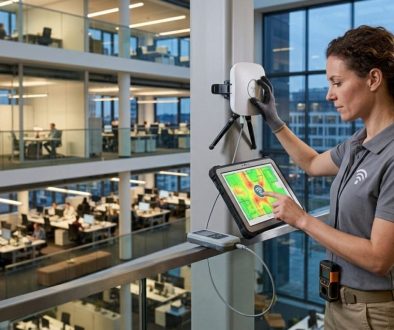
A professional WiFi site survey is the foundation of any high-performance network in crowded environments. It provides data-driven insights to design and optimize networks effectively.
Key Benefits:
- Identifies dead zones and interference sources
- Determines optimal access point placement
- Analyzes signal strength and coverage
- Helps plan for future scalability
- Ensures consistent performance under heavy load
There are different types of site surveys predictive, passive, and active each serving a unique purpose in designing networks for high-density usage.
Best Practices for High-Density WiFi
- Design for capacity, not just coverage
- Limit the number of users per access point
- Optimize channel usage to reduce interference
- Implement bandwidth management policies
- Regularly monitor and update the network
Why It Matters for Businesses
In large offices, poor WiFi can directly impact productivity, communication, and employee satisfaction. In events, it can affect attendee experience, digital interactions, and even brand reputation.
A strong, reliable network ensures:
- Seamless collaboration
- Faster workflows
- Better user experience
- Increased operational efficiency
Conclusion
Busy environments bring unique challenges that normal WiFi setups often can’t handle. Issues like too many users and signal interference can affect performance, so the network needs careful planning and proper setup.
By using professional WiFi site surveys and smart network design, businesses can build strong, reliable networks that work well even in crowded spaces. Investing in the right setup today helps ensure your WiFi can handle future growth, no matter how many people are connected.